

Top Hydraulic Pumps And Motors Suppliers Worldwide?

Choosing reliable Hydraulic Pumps And Motors suppliers requires more than comparing catalog prices. A pump may look impressive on paper, yet fail under heat, contamination, or continuous pressure. This guide examines leading suppliers worldwide through practical criteria, including product range, engineering capability, manufacturing quality, warranty terms, and regional support. It considers suppliers serving construction, agriculture, mining, marine, energy, and industrial automation. Real performance matters.

The review also looks at technical documentation, ISO certifications, testing procedures, spare-parts availability, and response times after installation. A strong supplier should explain displacement, pressure ratings, efficiency, noise levels, and fluid compatibility clearly. It should also help customers select suitable axial-piston, gear, vane, or radial-piston equipment. Small details matter, such as sealed packaging, accurate model numbers, and accessible service manuals.

No ranking is perfect. Supplier strengths can change by region, application, and production year. A company with excellent pumps may offer limited motor support. Another may provide fast delivery but weaker engineering assistance. These differences deserve honest attention. Therefore, this overview does not rely only on brand recognition or advertising claims. It compares publicly available technical evidence with customer service expectations and common field requirements. Readers should still verify current specifications, local certifications, lead times, and after-sales coverage before purchasing. That final check can prevent costly downtime, although it is often overlooked. Reliable decisions need evidence, not noise.
Top Hydraulic Pumps And Motors Suppliers Worldwide?

Global Hydraulic Pump and Motor Market: USD 42B Forecast by 2030

Hydraulic pumps and motors are moving from industrial backrooms into a wider global growth cycle. The hydraulic pump and motor market is projected to reach USD 42 billion by 2030. This estimate reflects demand from construction, agriculture, mining, material handling, and factory automation. Each sector needs controlled force, reliable motion, and efficient energy use.

Performance depends on more than purchase price. Engineers compare displacement, operating pressure, flow stability, noise, heat generation, and service access. Field experience also shows that fluid contamination can damage precision parts quickly. Small losses matter. A poorly selected pump may increase energy consumption and shorten motor life.

Reliable suppliers should provide clear test records, material traceability, installation guidance, and responsive technical support. Buyers often request performance curves, seal specifications, and verified operating limits before approval. Local inventory can also reduce downtime when a replacement is needed. Yet supplier rankings remain difficult to judge across regions. Marketing claims may not match long-term field results. Forecasts are not promises. Currency changes, delayed infrastructure projects, energy costs, and supply disruptions could alter the USD 42 billion outlook. A careful buyer should review total lifecycle cost, not only the quoted unit price, and compare evidence from similar working conditions.

Pump Types, Displacement Ranges, and Efficiency Above 90%

Top Hydraulic Pumps And Motors Suppliers Worldwide?

Pump Types, Displacement Ranges, and Efficiency Above 90%

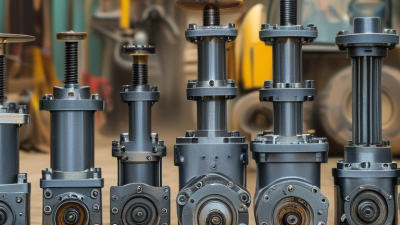
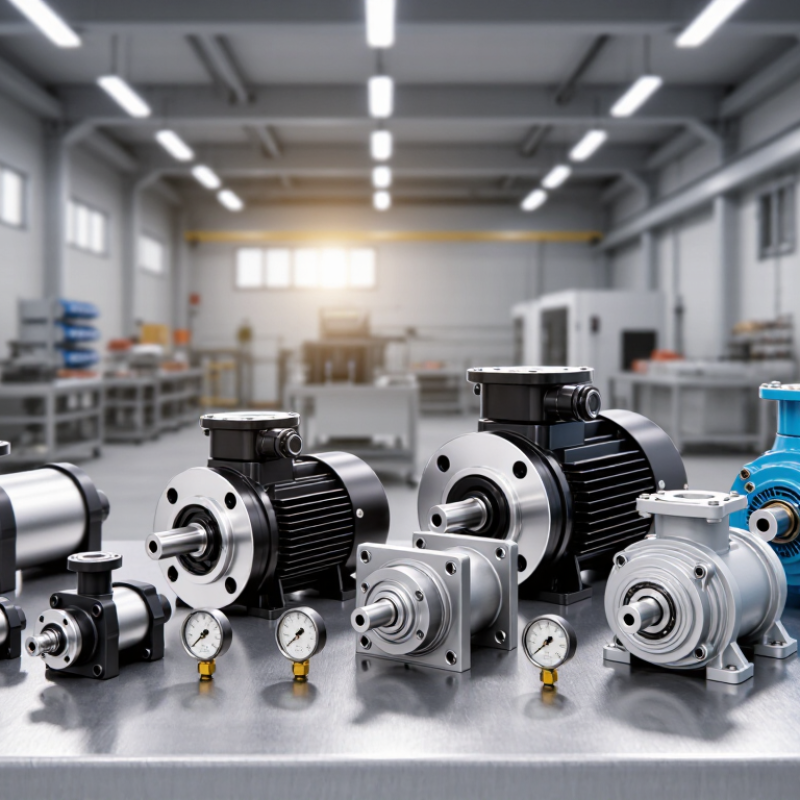
Hydraulic equipment suppliers usually offer gear, vane, axial-piston, and radial-piston designs. Gear pumps suit simple circuits and steady flow demands. Vane pumps run quietly at moderate pressures. Axial-piston pumps handle high pressure and variable displacement. Common displacement ranges begin near 0.5 cm³/rev and may exceed 1,000 cm³/rev for large industrial units. Hydraulic motors use similar designs, but their torque and speed ratings require separate evaluation.

Efficiency above 90% is achievable, but operating conditions matter. A well-matched piston pump may reach 92–96% combined efficiency near its rated pressure and speed. Volumetric efficiency can exceed 95% when clearances, oil temperature, and sealing remain controlled. Gear units often provide lower peak efficiency, yet their simpler construction can reduce maintenance risks. Always distinguish component efficiency from whole-system efficiency. Hoses, valves, filters, and heat losses can reduce the final result.

Reliable suppliers should provide tested displacement data, pressure curves, noise readings, and service guidance. Ask for results at realistic oil temperatures, not only laboratory conditions. Field checks with a flow meter and pressure sensor reveal problems quickly. A neat specification can still mislead. I have seen systems lose several efficiency points because of undersized hoses and contaminated oil. Another weakness is assuming maximum displacement always improves performance. It may increase torque, but it can also raise heat and energy demand.

Hydraulic Technology Typical Displacement Range Typical Peak Efficiency
Axial Piston Pump 5–1000 cm³/rev 90–98%
Radial Piston Pump 5–500 cm³/rev 90–96%
Vane Pump 5–250 cm³/rev 80–92%
External Gear Pump 0.25–-то 300 cm³/rev 80–92%
Gerotor Motor 8–800 cm³/rev 85–92%
Radial Piston Motor 20–8000 cm³/rev 90–96%

Axial piston and radial piston designs generally provide the highest peak efficiency and the widest pressure capability. Gear, vane, and gerotor units are often selected for compactness, lower cost, and moderate-flow applications. Actual performance depends on pressure, speed, fluid viscosity, temperature, leakage, and control settings. The values shown are representative engineering ranges rather than brand-specific specifications.

Leading Suppliers by Region: Bosch Rexroth, Eaton, Parker, and Danfoss

Hydraulic pump and motor sourcing is increasingly regional. European suppliers lead in engineered systems, electrification, and strict energy-efficiency testing. North American manufacturers remain strong in mobile equipment, agricultural machinery, and replacement parts. Asian suppliers compete through broad production capacity and shorter delivery cycles. MarketsandMarkets valued the global hydraulic equipment market at about USD 49 billion in 2023, with continued growth expected through 2028.

Regional strengths matter during procurement. European factories often provide advanced proportional control and low-noise designs. North American facilities usually offer robust field support and extensive aftermarket inventories. Asian producers can deliver cost-efficient pumps and motors for construction, material handling, and factory automation. Grand View Research reports that demand is expanding as industrial automation and construction investment increase. However, published market figures differ because analysts define hydraulic equipment differently.

Technical checks remain essential. A pump rated for 250 bar may perform poorly with contaminated oil or unstable temperature. I have seen small filtration errors create expensive downtime. Not every low-cost unit is inefficient, but lifecycle data is often incomplete. Buyers should compare volumetric efficiency, noise levels, seal materials, service networks, and warranty response. Supplier audits should include factory testing, traceability records, and spare-parts availability. Data helps, but site conditions still decide performance.

Top Hydraulic Pumps and Motors Suppliers Worldwide? — Leading Suppliers by Region
Regional overview of hydraulic pump and motor supplier requirements, technologies, applications, and standards
Region Primary Demand Sectors Common Pump Technologies Common Motor Technologies Typical Operating Pressure Key Buying Criteria Common Standards and Compliance Areas Typical Applications
North America Construction equipment, agricultural machinery, oil and gas, material handling, industrial automation Axial-piston Vane External gear Axial-piston Gerotor Orbital Mobile systems commonly use approximately 210–350 bar; industrial systems frequently operate around 160–250 bar. High efficiency, rapid parts availability, cold-start performance, service coverage, and compatibility with existing SAE connections ISO 4413 hydraulic-fluid power safety principles, SAE connection and mounting practices, UL or CSA requirements where electrical controls are integrated Excavators, skid-steer loaders, aerial work platforms, presses, injection-molding equipment, and drilling systems
Europe Factory automation, mobile machinery, renewable-energy equipment, machine tools, transportation, and process industries Variable-displacement piston Vane Gear Bent-axis piston Inline piston Orbital Industrial applications commonly use approximately 160–315 bar; specialized mobile and industrial systems may exceed 350 bar. Energy efficiency, low noise, electronic control integration, lifecycle cost, documentation, and environmental compliance CE marking requirements, the Machinery Regulation framework, ISO 4413, and European pressure-equipment requirements when applicable Machine tools, injection molding, wind-turbine pitch systems, agricultural equipment, refuse vehicles, and factory production lines
Asia-Pacific Industrial manufacturing, construction machinery, shipbuilding, mining, agriculture, logistics, and infrastructure development Gear Vane Axial-piston Orbital Radial-piston Axial-piston General industrial systems commonly operate around 100–250 bar; heavy mobile equipment often uses approximately 210–350 bar. Production scalability, total cost of ownership, local technical support, contamination tolerance, compact design, and delivery lead time ISO 4413, applicable national machinery and electrical safety rules, and customer-specific quality-management requirements Excavators, cranes, steel mills, machine tools, port equipment, agricultural tractors, and automated production systems
Latin America Mining, agriculture, forestry, construction, pulp and paper, ports, and oil and gas services Gear Vane Piston Orbital Gear Axial-piston Agricultural and industrial equipment commonly operates around 140–250 bar; heavy-duty mobile systems may use up to approximately 350 bar. Robustness, filtration tolerance, corrosion resistance, remote-service capability, spare-parts availability, and simplified maintenance ISO 4413 and local workplace, machinery, pressure, and electrical regulations applicable to the installation Mining trucks, sugarcane harvesters, forestry machinery, crushers, loaders, paper machinery, and port handling equipment
Middle East and Africa Oil and gas, mining, infrastructure, construction, marine equipment, utilities, and agricultural irrigation Axial-piston Gear Screw Radial-piston Axial-piston Orbital General hydraulic equipment commonly operates around 140–315 bar, with system pressure determined by the machine duty cycle and safety design. High-temperature capability, dust protection, corrosion resistance, filtration, hazardous-area suitability where required, and field service support ISO 4413, applicable oil-and-gas specifications, ATEX or IECEx requirements for relevant hazardous areas, and local lifting-equipment rules Drilling units, mobile cranes, mining equipment, desalination plants, marine winches, earthmoving machinery, and irrigation systems

Note: Pressure figures are indicative industry ranges rather than supplier-specific ratings. Actual operating limits depend on the pump or motor model, fluid type, temperature, duty cycle, contamination control, and system design.

Supplier Evaluation Using ISO 4409, ISO 3019, and SAE J744 Standards

Top Hydraulic Pumps And Motors Suppliers Worldwide?

Supplier evaluation should begin with measurable conformity, not catalog claims. ISO 4409 provides test methods for flow, displacement, torque, speed, and efficiency. During factory acceptance, buyers should request speed-load curves and repeatability records. Small gaps matter. A pump rated at 90% volumetric efficiency may perform differently after oil temperature rises. ISO 3019 then checks mounting dimensions, flange patterns, shaft ends, and identification codes. Mounting errors still happen.

SAE J744 offers widely used dimensional references for hydraulic pumps and motors, especially flange and shaft interfaces. Suppliers should submit certified drawings, tolerance data, and sample inspection results. One practical check is simple: compare the drawing with the installed adapter before approving production. Numbers expose weak testing. According to Grand View Research’s 2024 Hydraulic Pumps Market report, the global market was valued at approximately USD 10.5 billion in 2023, with continued growth expected through 2030. That expansion increases supplier choice, but not necessarily supplier quality.

A reliable evaluation also examines test equipment calibration, oil cleanliness controls, warranty-response records, and field failure analysis. ISO 4409 results without traceable instruments are incomplete evidence. SAE J744 compliance alone cannot prove service life. This is where procurement teams sometimes overtrust paperwork. Reports from MarketsandMarkets forecast steady growth in the hydraulic motors market through 2028, driven by construction, agriculture, and industrial machinery. Buyers should therefore compare equivalent duty cycles, not only purchase prices, while documenting every deviation from ISO 3019 and SAE J744 dimensions.

Selection Criteria: Pressure, Flow, Duty Cycle, Service, and Lifecycle Cost

Choosing top hydraulic pump and motor suppliers worldwide requires more than comparing catalog prices. Field experience shows that pressure ratings must match real operating conditions, not just peak machine data. Leave a practical safety margin for shock loads and cold starts. Pressure matters.

Flow determines actuator speed and production output. A pump delivering 120 liters per minute may seem suitable, yet pressure losses through valves, hoses, and filters can reduce actual performance. Ask suppliers for tested flow curves, efficiency figures, and noise data at your working temperature.

Duty cycle reveals whether a component can survive daily use. Intermittent construction equipment needs different protection than a pump running continuously in a factory. Check bearing design, cooling requirements, contamination tolerance, and expected service intervals. Small details matter. Request documented test methods and traceable quality records, rather than accepting broad performance claims.

Service support can prevent a minor seal problem from becoming a week-long shutdown. Evaluate technician availability, spare-part lead times, repair training, and warranty procedures in your operating region. Lifecycle cost includes energy consumption, oil cleanliness, downtime, inspections, and replacement labor. The cheapest unit can become expensive after repeated failures. However, buyers sometimes overestimate theoretical savings and ignore installation quality. That mistake deserves honest review. Compare suppliers using your actual pressure, flow, duty cycle, maintenance history, and five-year operating cost.