
Top Auto Parts Bearings Types You Need to Know?

When discussing Auto Parts Bearings, it is essential to understand the different types available. Bearings play a crucial role in the performance and longevity of vehicles. They reduce friction between moving parts, ensuring a smoother operation.

There are numerous Auto Parts Bearings, each designed for specific applications. Some are made for wheel hubs, while others serve in engines or transmissions. Understanding their functions can be overwhelming. Many may not realize the importance of using the right bearings. Incorrect choices can lead to inefficiency or even damage.

In the world of automotive parts, you often find a gap in knowledge. Car enthusiasts may know engines well but overlook bearing types. This can lead to missed opportunities for better performance. Learning about these components can empower users to make informed decisions.
Top Auto Parts Bearings Types You Need to Know?

Types of Auto Parts Bearings: An Overview

When it comes to auto parts, bearings play a critical role. Bearings reduce friction and allow for smoother movement in various mechanical systems. Different types serve unique purposes and are essential for vehicle performance.

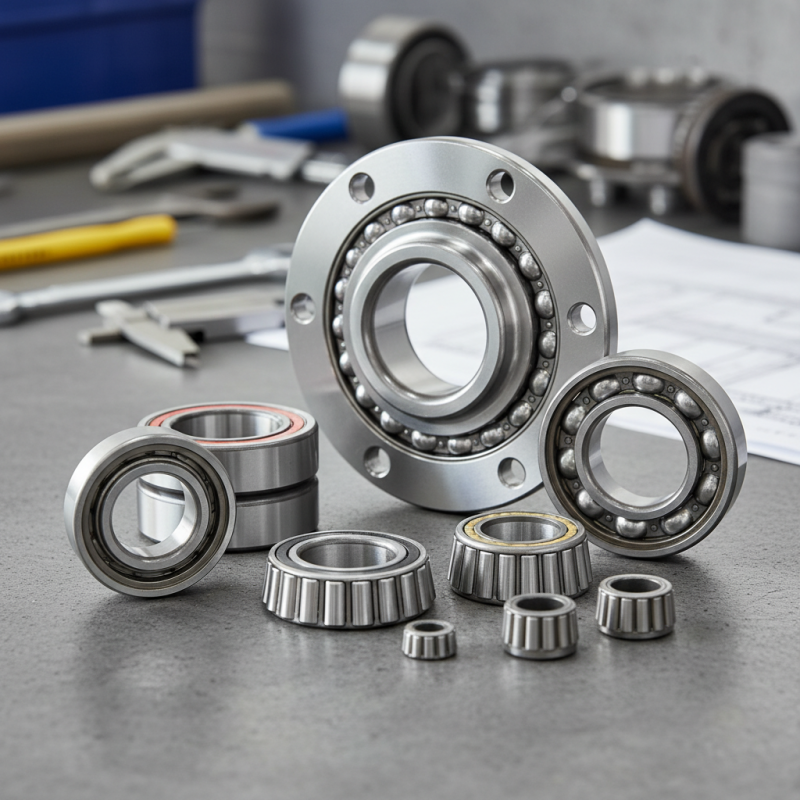
Ball Bearings are common. They handle both radial and axial loads well. They are often used in wheels and motors. However, they can wear out quickly under heavy loads. It’s important to inspect them regularly.

Roller bearings can support heavier loads but require careful alignment. Misalignment can lead to premature failure. Consider checking your alignment if you hear unusual noises. Needle bearings are another type. They are compact but can handle high loads. However, they may be more delicate than other types.

Tips: Regular maintenance of bearings is vital. Change them when needed to avoid further issues. Always consult a professional if you’re unsure about your vehicle’s bearing condition. Pay attention to any changes in your vehicle's performance — it could signal trouble ahead.

The Functionality of Ball Bearings in Vehicles

Ball bearings play a crucial role in vehicles. They reduce friction between moving parts. This improves efficiency and performance. In any car, ball bearings are found in critical places. They are in the wheels, engines, and transmission systems. These tiny components enable smooth rotations and movements. Without them, mechanical systems would wear out quickly.

However, ball bearings can face issues. They may become damaged due to excessive heat or contamination. Sometimes, drivers overlook their maintenance. This neglect can lead to larger problems down the road. Regular inspections are vital. If a ball bearing is failing, it can cause noise and affect handling. Keeping an eye on these components helps ensure safety. Drivers should not underestimate their importance in vehicle performance.

Understanding Roller Bearings and Their Applications

Roller bearings play a crucial role in various applications. They reduce friction between moving parts, enhancing efficiency. These bearings come in different designs, including cylindrical, tapered, and spherical. Each type has its specific use cases. For example, cylindrical roller bearings are great for high radial loads, while tapered ones excel in handling both radial and axial loads.

The design of roller bearings allows for significant load distribution. This design leads to improved performance in vehicles and machinery. However, they require precise installation and maintenance. Misalignment can lead to excessive wear. Regular checks are essential to ensure optimal performance. Sometimes, users overlook these details, leading to potential failures that could be easily avoided.

Understanding the mechanics of roller bearings is vital for anyone in the automotive field. Knowledge and attention to detail can make all the difference. It’s easy to assume that all bearings function similarly, but each type has unique properties. Users should recognize the importance of selecting the right bearing for their specific application. This awareness will lead to better outcomes and longer-lasting machinery.

Exploring Needle Bearings and Their Benefits

Needle bearings are crucial in many applications due to their design and performance characteristics. A needle bearing contains long, thin rollers that provide a larger surface area. This allows them to handle heavy loads while maintaining a compact size. According to a report by Research and Markets, the global needle bearing market is expected to reach $4.5 billion by 2026, reflecting their growing demand in various industries.

One of the notable advantages of needle bearings is their ability to reduce friction. By optimizing contact surfaces, they enhance efficiency in machines and vehicles. This leads to better fuel efficiency and lower emissions. However, the manufacturing process of needle bearings often involves precision engineering that may not always guarantee perfection. Small defects can significantly impact performance.

In addition, needle bearings can have limitations. They are sensitive to misalignment and can wear out quickly if not correctly maintained. Regular inspections are essential to ensure their longevity. The failure to address maintenance issues can lead to operational disruptions. In environments with high contamination, additional protective measures may be necessary. Understanding these factors is vital for effective application.

The Role of Tapered Bearings in Automotive Performance

Tapered bearings play a pivotal role in automotive performance. These bearings efficiently handle both radial and axial loads. They are designed to support the weight of vehicles while allowing smooth rotation of wheels and gears. In fact, a report by the Society of Automotive Engineers indicates that properly functioning tapered bearings can enhance fuel efficiency by 5-10%.

The installation of tapered bearings, however, is crucial. Improper alignment can lead to premature wear. This results in higher maintenance costs and decreased vehicle longevity. A recent study found that over 20% of vehicle failures are related to bearing issues. Regular inspections can mitigate these risks substantially.

Tapered bearings also contribute to noise reduction. Their design minimizes friction, resulting in quieter operation. Yet, many drivers overlook this aspect, focusing only on performance metrics. As vehicles evolve, understanding the intricacies of tapered bearings becomes essential for optimal performance. Their significance cannot be understated, but awareness remains a concern for many.

Top Auto Parts Bearings Types You Need to Know - The Role of Tapered Bearings in Automotive Performance

Bearing Type Application Load Capacity (kg) Advantages Disadvantages
Tapered Roller Bearings Wheel Hubs, Transmissions 8000 High radial and axial load capacity Requires precise alignment
Ball Bearings Alternators, Electric Motors 5000 Low friction, high speed capability Lower load capacity compared to tapered
Spherical Bearings Suspension Systems 7000 Can accommodate misalignment Limited speed capability
Needle Bearings Gearboxes, Power Steering Systems 4000 Compact size, high load capacity Sensitive to misalignment